
Myths About Microchips – and what you need to know
If you’ve adopted a pet from a rescue group or animal shelter, your new family member likely came with a microchip. What is a microchip and how does it work? Keep reading for all the insights on this pet identification option.
Microchips
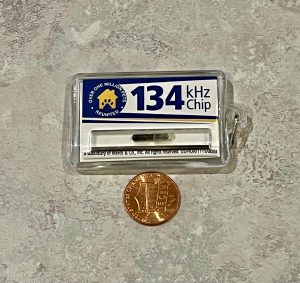
What is a microchip? A microchip is a small, permanent identification device we insert under the skin of a pet. That chip contains a unique number that identifies the pet and its owner.
How does it work? Microchips are passive transponders that don’t have a power source. They only activate when someone passes a scanner over them. This scanner reads the unique ID number of the pet.
How do they help pets? Microchips provide permanent pet identification and allow animal control offices, shelters, and veterinary offices to reunite pets and owners quickly.
How are they implanted? We apply a local anesthetic and inject a microchip under the pet’s skin, usually between the shoulder blades. The device is slightly larger than a grain of wild rice, and the procedure is quick and painless. Microchips can identify cats, dogs, rabbits, ferrets, horses, lizards, snakes, fish, turtles, and tortoises. Farmers and ranchers also use microchips for livestock such as sheep and cattle.
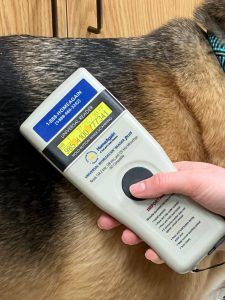
How are they read? Anyone at an animal shelter, veterinary clinic, or animal control agency can use a hand-held scanner to identify an animal. The scanner will display the unique ID number of a microchipped pet.
How are they registered? Most microchip manufacturers maintain a national registration database. We register your and your pet’s information when we implant the chip. If any of your contact information changes, you must update the chip manufacturer.
Myths and Misconceptions
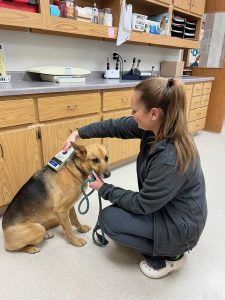
Myth #1: Microchip companies can always see my pet’s location. Fact: A microchip is not a GPS tracker. You can’t use it to find your pet when she’s missing. Microchips can only transmit information when someone scans them.
Myth #2: Microchips are automatically registered once implanted in your pet. Fact: Just having a microchip isn’t enough. You must register your contact information with the chip manufacturer. (At Countrycare Animal Complex, we will register the chip for you when we microchip your pet). One study found that only 58% of the microchipped pets in over 50 North American animal shelters had properly registered chips. Be sure to update your contact information if you move or change phone numbers.
Myth #3: Scanning a microchip reveals your personal contact information. Fact: When scanned, the only information a microchip transmits is a unique ID number. Veterinarians and shelters use that ID number to connect with the microchip company. The company can use the information in their database to contact you and let you know how to reunite with your pet.
Myth #4: Microchips expire. Fact: Every microchip comes in packaging with an expiration date, but that only tells the shelter or clinic how long the package will remain sterile. Once implanted, the microchip itself never expires. It stays in your pet’s body as a permanent form of identification.
Myth #6: Indoor cats don’t need a microchip. Fact: Even indoor cats can escape and go missing. Indoor cats are less familiar with outdoor hazards and have a harder time knowing the way home.
Myth #7: Microchips can move around, migrate through your pet’s body, and even fall out. Fact: Though some microchips can migrate, it is rare. Most chips tend to stay close to the insertion area when implanted by a trained professional. The microchips we use at Countrycare Animal Complex have “anti-migration technology” to help the chip stay where we inserted it.
Myth #8: Microchips can “zap” or “ping” pets, causing them pain. Fact: Microchips do not emit any “shocks” to your pet. Once implanted, the microchip sits dormant inside the body until scanned. The radio waves it transmits are pain-free.
Myth #9: Microchips can replace a collar and tag identification. Fact: Microchips are great for permanent, tamper-proof identification, but nothing replaces a collar with up-to-date identification tags. If a lost pet is wearing a collar with tags, anyone can read the information on the tag and contact you. But if a pet is not wearing a collar and tags, or if the collar is lost or removed, a microchip might be his only identification.
Contact us today to set up a microchip appointment for your pet. The process is quick and painless, and it may be the only way you can identify your lost or stolen companion!