The skin can only show you that it has a problem in so many different ways. It can lose fur, it can be itchy, it can be red and inflamed, and it can get scabby. Because of this, many skin conditions and diseases can all look very similar. In previous blog posts, we have covered some skin conditions, such as allergies and hot spots. Today, I will be discussing a skin condition called ringworm.
What is ringworm?
Although the name “ringworm” may make you envision a nasty worm slithering under your pet’s skin, ringworm is a fungal organism. Ringworm belongs to the group of fungi called Dermatophytes and is sometimes called dermatophytosis.
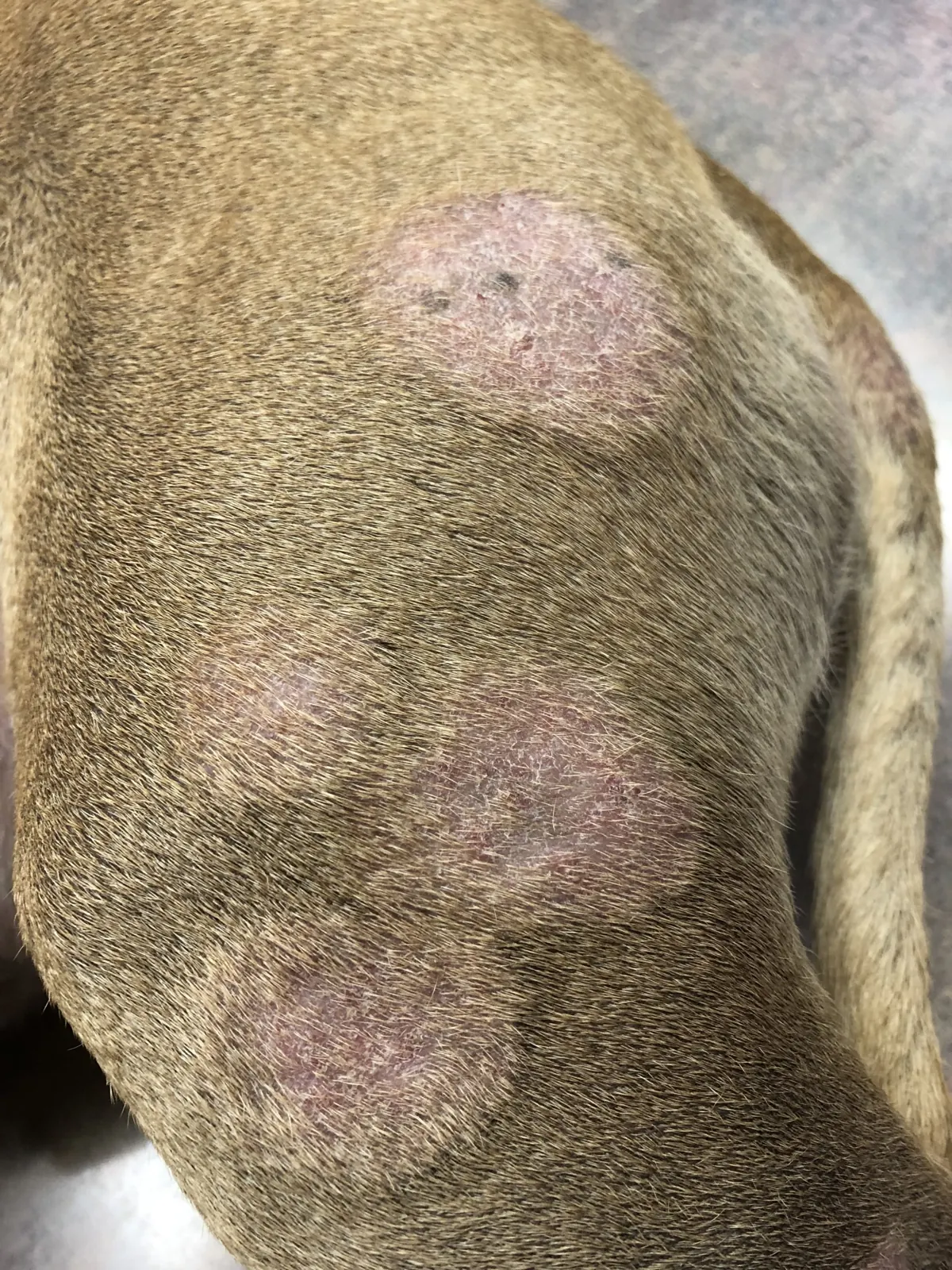
What are some signs I might see on my pet?
The typical signs of this fungus include:
- Patchy, circular areas of fur loss
- Fragile fur shafts that can break or be pulled out easily
- Areas of inflammation and irritation of the skin
- Crusty, scabbed areas on the skin
- Central hair growth in healing areas
How do you get ringworm?
Ringworm is transmitted through direct contact with the fungus. This can be from an infected animal or person, a contaminated object like a comb, or contaminated surfaces. The fungal spores can remain dormant (waiting and able to cause infection) for up to 18 months on things such as brushes, bedding, carpet, outside surfaces, food bowls, etc. Fortunately, just because you come in contact with ringworm doesn’t mean you or your pet will become infected. This makes finding the source of the fungus very difficult!
Some animals can be asymptomatic carriers. This means they may not show outward signs of the disease but still carry the fungus. Even without symptoms, these animals can still spread ringworm to other animals or people in the home. (Thankfully, this is rare, but it can occur.)
How will my vet know if it’s ringworm?
For some pets, the outward appearance of the skin gives us a clue that it could be ringworm. Remember, appearance alone is not a definitive diagnosis! Some vets will use an ultraviolet lamp (called a Wood’s Lamp) to see if the affected areas of skin have a yellow-green glow.
Unfortunately, not all ringworm will glow. And sometimes other things, like dandruff, do glow. If we suspect the condition is ringworm, we will need to do additional diagnostics.
What further testing might be done?
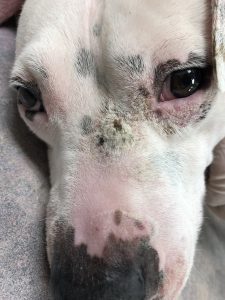
If we are concerned about ringworm, we will likely recommend a fungal culture. With this test, we take a sample of your pet’s fur and crusting skin and place it in a sterile container. We send the sample to a lab where they will put the fur/crusts on a special plate with growth medium to see if the fungus will grow. If the fungus grows, we can confirm a diagnosis of ringworm.
How is this fungus treated?
Treatment options depend on the severity of your pet’s lesions and infected areas. We may recommend oral medications, topical medications (sprays or medicated shampoos), or other medicated treatments. Give the medication for at least 3-4 weeks and bring your pet for a progress exam to ensure the fungus is completely gone. You may also consider supplements to help support the immune system and healthy skin during healing.
Do I need to worry about my other pets or myself getting ringworm?
Ringworm is contagious and can be passed to other animals, including dogs, cats, guinea pigs, and rabbits, to name a few. It is also zoonotic which means that people can get ringworm from their pets. Younger people and immune-compromised people are most commonly affected are younger people or people with decreased immune systems (those on certain medications, going through chemo or cancer treatments, or who have immune mediated diseases).
Practice good hygiene at home to help prevent the spread of ringworm. Wash your hands well or wear gloves while handling infected animals. Keep infected animals in an area of the home that can be frequently cleaned and disinfected. Reduce the number of people who come in contact with your infected pet until treatment is complete. If you are concerned that you might have ringworm, consult your physician immediately for diagnosis and appropriate treatment.