Written by
Aili V. Heintz, DVM
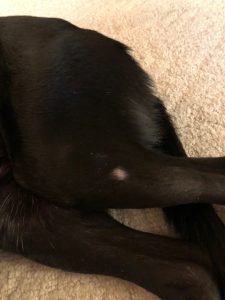
Non-cancerous Lumps Benign lumps are things that are non-cancerous including follicular cysts (like pimples under or on top of the skin), bug bite irritations, papillomas (warty growths), and lipomas (fatty masses). While these masses are not cancerous, it is still important to monitor these areas closely. These lumps are not “normal,” so if they change significantly, they may need further investigation or surgery. Cancerous Tumors Benign tumors are cancerous masses located in a single area. They don’t tend to spread to other places in the body, so once we surgically remove the mass, the pet is cured of that tumor. Aggressive or malignant lumps are those that may spread to other areas of the body. They may have “hidden fingers” or pieces of the tumor not visible with the naked eye and may require more than a singular surgery. Mast Cell Tumors Now that we have clarified the kinds of lumps you might see, let’s look at mast cell tumors (MCT) in more detail. Mast cell tumors are the most common skin tumor in dogs, accounting for 7-21% of all skin tumors. But MCTs can be found in areas other than the skin including inside the body affecting the spleen, liver, intestines, and even the bone marrow. MCT can affect any dog breed, but some breeds are more prone to them than others. MCTs are seen more frequently in boxers, English bulldogs, and Staffordshire terriers (pit bulls), to name a few. Cats can have MCTs but they are less common than in dogs. One of the difficulties with MCTs is that they can often look like a benign skin lump. What looks like an uncomplicated mass under the skin can actually be quite aggressive. MCTs are sometimes called the “pretenders” of the lump world because they look like bug bites, warts, or allergic reactions. Now You See It, Now You Don’t Some mast cell tumors are slow-growing and don’t seem to bother the pet. Others can get irritated and ulcerated, causing your pet to feel itchy or painful. This type of lump can also wax and wane in size (get bigger and then smaller) spontaneously. So, you’re not crazy if you think the lump is disappearing and reappearing! This is because MCTs can release histamines when irritated, possibly from your dog’s licking or scratching. In turn, the histamines cause swelling of the area like you would see from a bee sting. The waxing and waning of size can sometimes fool people into thinking the mass is going away even when it’s not. Diagnosing Mast Cell Tumors Since MCTs can often be mistaken for less aggressive types of lumps, there are multiple ways to determine what kind your pet might have. Fine-Needle Aspirate One way we can diagnose a mast cell tumor is by performing a fine-needle aspirate (FNA) of the mass at a regular office visit. For an FNA, we insert a needle into the lump to get a representative sample of the type of cells inside the mass. We then look at the sample under the microscope or send it to a pathologist for further review and diagnosis. Often, we give an antihistamine injection before the FNA procedure. We do this to avoid “upsetting” the mass and inadvertently causing it to swell and be uncomfortable for your pet. Surgical Removal Another option is to surgically remove the lump and send it to the pathologist for further review. A pathologist will be able to confirm what kind of mass it is and how aggressive it is. The most difficult part of surgical removal is that MCTs have hidden little “fingers” or “tentacles” that can not be seen with the naked eye. Depending on the size or location of the mass, it can be hard to remove the tumor in one singular surgery. We might need to do additional follow-up surgeries to remove the entire mass. Oncology Referral We may also recommend referral options to go see a cancer specialist or an animal oncologist. An oncologist has additional treatment options for MCTs that your regular veterinarian may not have. Oncologists have more advanced screening options to look for the spread of MCTs. They also have treatment options that include radiation, chemotherapy, and newer medications that can help slow growth and rid the body of the cancer. Prognosis of Mast Cell Tumors The prognosis for a pet affected with an MCT depends on the location of the mass, how aggressive it is, and how it responds to surgery or additional treatments. Even if the MCT is small and we can remove it with a singular surgery, it is extremely important to monitor your dog for any future lumps/masses. New MCTs may occur, especially in pre-disposed breeds. If you find another mass in the future, tell your veterinarian right away. It will be important for us to perform an aspirate or surgery while the lump is still small. It is critical to try to stay ahead of this type of cancer. If your pet has lumps or bumps that worry you, bother your pet, or change in size, schedule a veterinary exam. Remember, not all lumps are bad or cancerous. So, don’t panic! Your vet will talk with you and suggest the best options for your pet. Dr. Heintz is a small and exotic animal veterinarian at Countrycare Animal Complex in Green Bay, WI. She earned her Doctor of Veterinary Medicine from the University of Illinois – Urbana/Champaign. Her passion is helping all animals, whether furry, scaly, or feathered, lead long and healthy lives.