
RCP (Rhino-Calici-Panleukopenia) All kittens and cats should be vaccinated with a series of two RCP vaccines that provide three years of protection. After the initial series, a blood titer may be performed to determine immunity.
Resources
Your new kitten or cat
Parenting a new kitten is a rewarding, although sometimes challenging, commitment. Here’s our guide to help you get started.
Congratulations
Congratulations on your new addition to the family!
The companionship of a pet has positive benefits for people. Kittens give affection, devotion and never-ending smiles.
A new pet needs much more than a food bowl and a kitty bed to thrive. And while it may be a lot of work initially, it’s well worth the effort in the long run. Establishing good and healthy habits from the start will lay the foundation for many cat-years of happiness for you and your new kitten.
Kitten basics
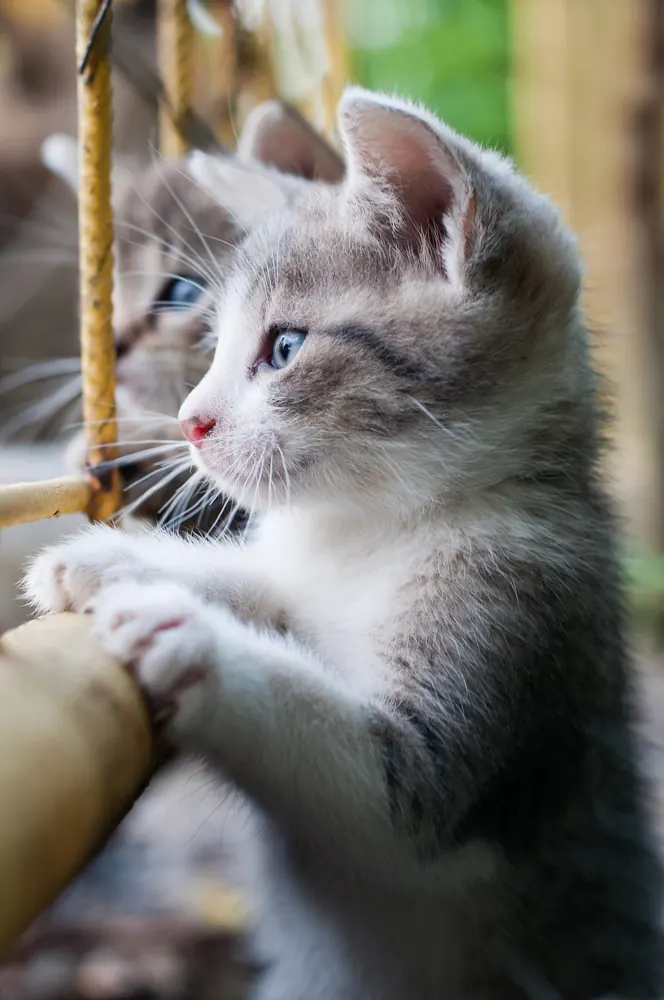
Born knowing how to get into mischief
Kittens aren’t born innately knowing how to be good. In fact, they’re born innately knowing how to get into mischief. Your job is to curtail that misbehavior and, when it gets out of hand, redirect it into acceptable behavior.
Litter box training
Decide the location you want your kitten to use the litter box, preferably where there is privacy and safety (especially if you own a dog too). You may need to try different types of boxes (covered vs. uncovered) and types of litter to make sure your cat is happy with his elimination box. Some cats like to urinate in one box and defecate in a different box, and some cats can be very particular about the type of litter and how often it is cleaned.
A kitten may avoid the litter box because it’s too out of the way, or because it’s next to where the dog who chases him sleeps. He may also avoid it because it smells strongly of harsh chemicals or urine, because the litter is scented (most cats prefer unscented litter), because the litter is dirty, or because he doesn’t like its texture. Try different boxes and litters. If your cat goes to the bathroom just outside the box, he is telling you that he would go inside the box if it was just a little “different.”
The basement can be a good location, so that they get exercise running up and down the stairs for food and litter box. But don’t put multiple litter boxes next to each other: spread them out to accommodate different preferences and safety. No one likes to be pounced on while they are relieving themselves.
Cats + 1
The rule of thumb: one more litter box than you have cats
1 cat = 2 litter boxes, 2 cats = 3 litter boxes. Also, try to have one litter box per level of your home.
Scratching
Furniture scratching is yet another normal cat behavior. Cats scratch vertical surfaces to mark their territory with scent from their foot pads, as well as to leave a visual marker on your furniture. Provide your cat with sisal scratching posts and trim your cat’s nails to reduce the damage he can cause. Surgical front declawing is a permanent solution to the problem.
Aggression
Play aggression is part of growing up for cats, to a point. Play fighting and play hunting are important practice for behaviors that adult cats would need if they were growing up in the wild, and may still need in many domesticated situations. Kittens normally play with their littermates, chasing, pouncing, wrestling, biting and scratching. Without littermates, you become your kitten’s sparring partner. When playing with their littermates, kittens learn how to hold back on the intensity of their biting and scratching, because when they get too rough, the other kitten either retaliates or quits playing.
A kitten who is engaging in play aggression lashes his tail back and forth, flattens his ears and dilates his pupils. These are signs that an attack against your hand or other vulnerable part is about to follow. It’s tempting to let your baby kitten play fight with your hand when he’s young, but this is a bad habit that you’ll regret when your kitten gets bigger. The same is true of letting your kitten practice his hunting skills on your hands and feet. It’s cute now, but it won’t be when he gets older.
When play gets too rough
- If you see your kitten readying to jump on you, try to distract him with a loud noise.
- If he’s already being too rough with you, say “Ouch!”, place him on the floor and quit playing with him for several minutes. Then use a toy instead.
- Don’t strike him: he can take it as extra-rough play and escalate his own aggression, or learn to be afraid of you or your hands.
- If your kitten is treating your body parts like toys, get him something more enticing to play with. Dangling toys are great for practicing hunting skills, while stuffed toys can make good sparring partners.
Kitten proofing
Channel curiosity toward safe fun
Kittens love to play with everything. The inherited tendency to investigate their surroundings is very strong in the young cat. Your success in preventing problems depends on how effectively you can channel your kitten toward safe fun. Make sure to kitten proof your house so they do not swallow strings, yarn, small toys, etc.
Follow these tips to help avoid problems
- Purchase kitten or cat toys that do not cause choking.
- Rotate toys each day so he stays interested.
- Kitten proof your house: do not leave things on the floor that he could choke on or swallow.
- Provide lots of exercise: unused energy contributes to the desire to search and destroy!
Household toxins
Many substances can be harmful to your kitten. Below is a list of some of the common toxins you should avoid.
Foods
- Chocolate
- Coffee & alcohol
- Onions
- Grapes & raisins
- Fatty foods & grease
- Xylitol sweetener
- Gum
- Tea leaves
- Raw yeast dough
Outside hazards
- Algae in ponds
- Antifreeze
- Fire pits & grills
- De-icing salts
- Moldy compost
- Gasoline & oil
- Pesticides
Household items
- Human medications
- Drain cleaners
- Bleach
- Disinfectants
- Mothballs
- Rat & mouse bait
- Needles & thread
- Rubber bands
- Tobacco products
Plants
- Azalea
- Daffodils
- Ferns
- Hydrangea
- Iris
- Lilies
- Philodendron
- Poinsettia
- Tulips
Veterinary care
Intestinal parasites & fleas
Worms are abundant in the environment. Cats can acquire these worms from infected soil or feces, and kittens are usually born with worms. Intestinal worms can cause vomiting, bloody diarrhea, anemia and stunted growth. Hookworms and roundworms also pose a threat to human health if your family is exposed to these worms. Fecal screening tests and dewormers are highly recommended to keep everyone safe.
Fleas can make your cat very uncomfortable and also allow a flea infestation into your home. Flea control is also important, since some fleas transmit tapeworms to your cat, and fleas will bite humans.
Vaccinations
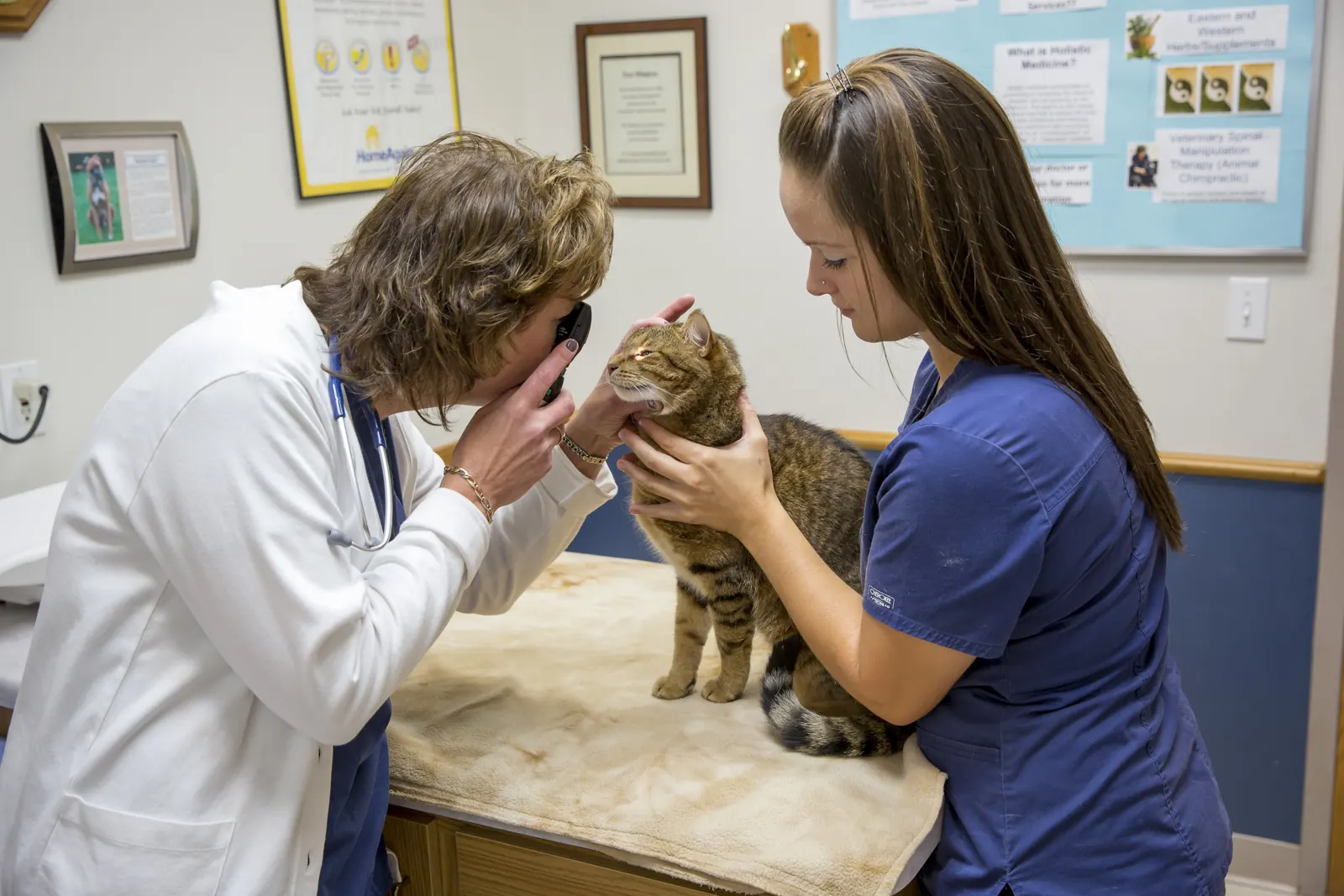
Rabies Rabies vaccination is required by law for cats in some counties. Not only is there no cure for rabies, but there is also a human health risk, since humans can contract rabies. The initial rabies vaccination for a cat is valid for one year; booster rabies vaccinations are valid for three years.
FeLV Feline Leukemia is a virus spread between cats that causes immune suppression and certain types of cancer. The vaccine is recommended for all cats that go outdoors. All kittens are screened for FeLV with a blood test.
Vaccination schedule
Every kitten receives the vaccine named at each age; the “+/-” vaccines are given to cats with an outdoor lifestyle.
8 weeks
1st RCP
All kittens12 weeks
RCP booster
Outdoor lifestyle: +/- FeLV16 weeks
Rabies
Outdoor lifestyle: +/- FeLV booster
Spay / neuter surgery
Spaying, neutering and signs of illness
Pets that are not used for breeding should be spayed (females) or neutered (males) between 6–9 months of age to prevent unwanted pregnancies and behavioral issues. Unspayed females will often spray furniture and walls with urine to leave a scent to attract male cats. Male cats kept indoors will also cry and demand to be let outside, and spray urine on walls and furniture to mark their territory and attract females.
There is a serious overpopulation problem in the U.S. Over 4 million dogs and cats end up in shelters every year and over 60% are euthanized. One unspayed cat can produce 10–15 kittens each year, each one needing a home. It is our duty, as responsible pet owners, not to contribute to these staggering statistics.
6–9 months
The age to spay or neuter a pet not used for breeding
10–15
Kittens one unspayed cat can produce each year
4 million+
Dogs and cats that end up in shelters every year
Over 60% of them are euthanized.
Illness symptoms
It is important to watch your pet for any early signs of illness. If you observe any of the following symptoms in your new kitten, it’s time to contact the veterinarian:
- Pale gums
- Nasal discharge
- Swollen, red eyes
- Diarrhea
- Lack of appetite
- Vomiting
- Lethargy (tiredness)
- Difficulty breathing
- Poor weight gain
- Swollen or painful abdomen
- Unable to pass urine or stool
- Wheezing or coughing
Home hygiene
Brushing, ears, nails and teeth
Basic kitten hygiene at home includes basic care such as ear cleanings, nail trims and dental care. We recommend getting your kitten used to these procedures when they are young so they are easily accepted. Make sure to start slowly and give lots of treats and positive reinforcement to make the experience fun for everyone.
Brushing Most cats do not need to be bathed (and do not enjoy water). Regular brushing helps prevent hairballs and matting of the hair coat. This is crucial, especially if you have a medium or long haired cat.
Ears Clean the ears with a mild pet ear cleaner. You can wet a cotton ball and wipe inside the ear, repeating with a fresh cotton ball until it comes away clean. Do not use a Q-tip (unless properly trained): it could damage the ear canal or eardrum. Ears should be cleaned whenever they are dirty.
Nails Trim nails frequently (every 4–6 weeks). If toenails grow too long they can cause multiple problems, including nail bed infections, foot deformities, or pain when walking. Be very careful not to cut the nails so short that they bleed: this can be painful, and your pet may then resist future nail trims.
Teeth A pet with clean teeth and pleasing breath is happier and nicer to be around, and there are medical reasons for daily dental care too. Most dental problems occur under the gum line and can go unnoticed until there is severe decay and gum infection, and oral disease can damage the heart, liver and kidneys. Brushing the teeth or using dental products daily is the key!
5 years
What regular dental care can add to a pet’s life
70%
Of cats show oral disease by the age of 3 without proper dental care
Nutrition & socialization
You generally get what you pay for
Nutrition is one of the biggest factors that contributes to a pet’s overall health and well-being. Pet food comes in all shapes and sizes, from very low-quality, cheap foods or average commercial pet food to high-end or natural pet foods. Not all pet food is created equal, and you generally get what you pay for: if the food is inexpensive, it is generally because low-cost, low-quality ingredients were used.
We recommend that all cats be fed natural, high-quality, grain-free cat food (or a raw or dehydrated diet). The higher cost of high-quality pet food is easily outweighed by better health. Cats are obligate carnivores and did not evolve to eat processed cereal grains (used so manufacturers can reduce costs). The carbohydrates of these foods contribute to obesity, diabetes, kidney stones, behavior problems, allergies, skin problems and many other conditions. Also, corn and wheat ingredients should always be avoided, because they are the most common food allergies in pets.
Socialization
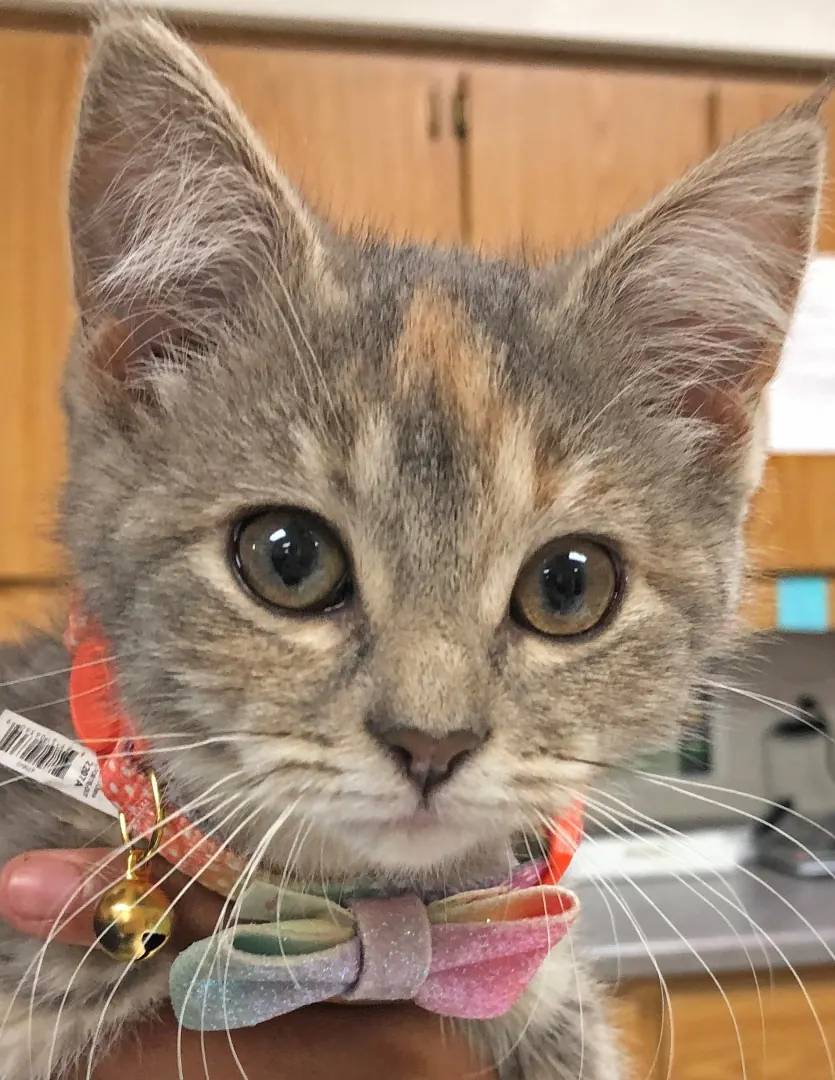
Kittens need to learn about our world: car rides, vacuums, and other people and animals. If they do not have a chance to learn about people, animals, and things in their environment, they may grow up to be fearful or anxious adult cats. Therefore, it is important to provide early socialization and positive exposure to as many people, animals, sights, sounds and places as possible.
Socialization is the process of developing relationships with other things in the environment. The first six months of a kitten’s life are the most critical for social development, and proper socialization during kittenhood helps avoid behavioral problems down the road.
Make sure to keep it positive. Positive reinforcement, such as small treats, has been proven to be much more effective than punishment.
Keep your kitten on track
More for you and your new cat
In their words
The hearts we’ve touched

“I arrived with a bag of pills and not much hope for Fina’s quality of life. Dr. Strickfaden listened, and within weeks my German Shepherd was on the road to recovery.”

“Years ago when all other vets gave up on my older dog Katy, Dr. Strickfaden got her back to agility competition form with acupuncture. I’m a big fan!”

“Countrycare Animal Complex is what I wish for all pets. Your compassion and genuine caring makes all the difference. Duke is a happy dog because of you.”

“Everyone there was great — from making the appointment to the vet tech to our vet. Everyone was super friendly and nice. They took their time. We didn’t feel rushed. We were very happy and grateful to the staff.”

“Dr. Heintz was so gentle and compassionate with our dog. The vet tech was so kind and understanding with all of the questions that I asked her. They made me feel comfortable with the decisions that we made for Maddie.”
See all testimonials →
1 of 5