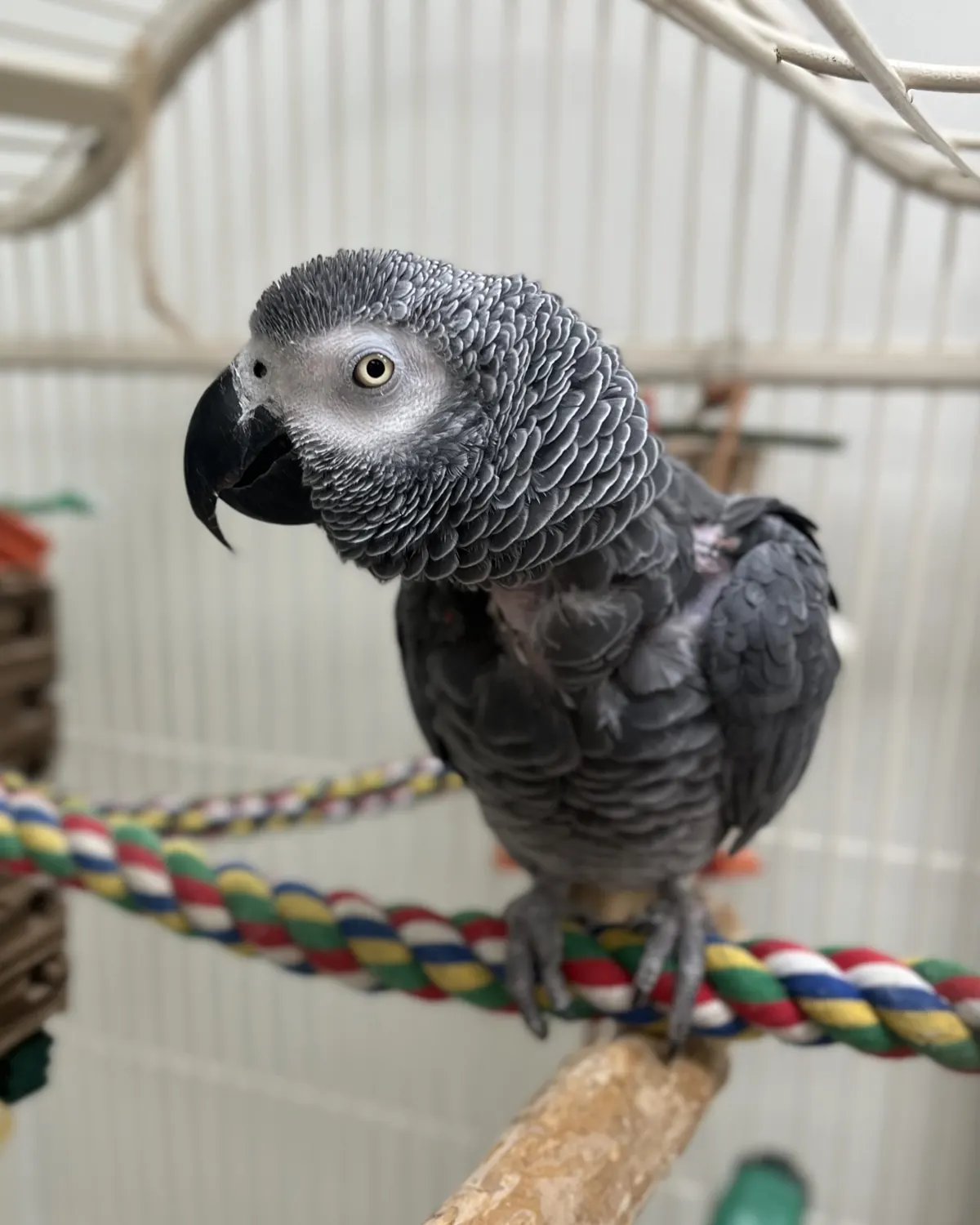
Birds, like all pets, require routine care and grooming. For birds, grooming refers to clipping wing feathers, trimming nails, and occasionally trimming the beak. If you don’t do these things on a regular basis, your bird may accidentally fly out of an open door or window, may develop foot sores or overgrown nail problems, and may not be able to eat properly.
As with all exotic pets, birds can become stressed very easily – especially when they don’t understand what is happening during a grooming session. It is best to do little bits at a time and not tackle all three services in one event. Schedule a visit with an exotic veterinarian or a trained veterinary technician to help you perform these services properly and safely.
Feathers
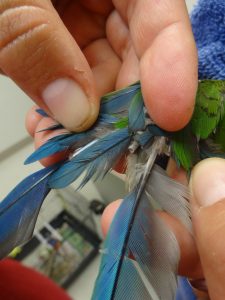
Clipping the wings of companion birds decreases the possibility of escape and flying accidents. However, it does not completely eliminate a bird’s ability to fly. They can still catch an updraft or travel far enough to become lost or injured.
There are a few special considerations to keep in mind when trimming feathers. New feathers that are growing in (blood feathers) will have a visible pink or purple blood supply in the shaft of the feather. If you cut these feathers, they will bleed profusely. You will usually see these feathers during a molting cycle, so avoid clipping them until they are fully grown.
There are two common ways to clip the wings. 1. You preserve the first 2-3 primary feathers. When the bird folds its wings, the wings look normal. 2. You clip the first 7-8 primary flight feathers below the primary covert feathers.
Nails
Most birds need regular nail trims. Sharp, uncomfortable nails that are overgrown decrease the enjoyment of your playtime and interactions with your companion. Your bird may develop foot sores and other orthopedic issues over time. Rough or cement-based perches can help keep the sharp nail tips rounded in between trims, but should not be the only perch option. To avoid irritation of the feet, other types of perches should also be available.
Generally, remove very little during a nail trim to avoid cutting the painful blood supply within the nail. Never cut higher than the flat surface of the foot pad! If necessary, use styptic powder on the nail tip to stop the bleeding if you cut the nail too short.
Beak
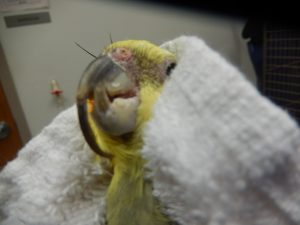
Healthy birds with proper nutrition and abrasive surfaces in their enclosure do not typically require beak trims. Sometimes due to a deformity, injury, infection or nutritional imbalance, the beak becomes overgrown making it difficult for the bird to eat and preen properly. An overgrown beak can be a sign of a more serious illness, so contact an exotic veterinarian as soon as possible.
As with nail trims, remove only a small amount of the beak tip at a time, being cautious to avoid the blood supply. You may need to trim the beak several attempts over a few weeks or months to get the beak to an appropriate length.
Basic grooming is important for the overall health and well-being of your feathered companion. It is an important part of bird ownership and can pave the way for a more fulfilling and enjoyable relationship.